 صحافة بلادي صحيفة إلكترونية مغاربية متجددة على مدار الساعة تعنى بشؤون المغرب الجزائر ليبيا موريتانيا تونس

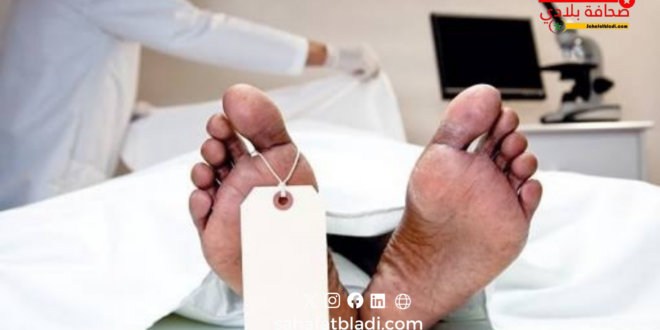
RabatThe report of the temporary exploratory mission on the situation of forensic medicine in Morocco revealed the structural imbalances that the system suffers from, most notably the severe shortage of forensic doctors, the weakness of equipment, and the meager financial compensation, warning of the repercussions of this on the quality of medical expertise and the course of justice.
The report was presented on Tuesday during a meeting of the Justice, Legislation, Human Rights and Freedoms Committee in the House of Representatives, in the presence of the Minister of Justice, where he called for adopting comprehensive reforms to rehabilitate the sector and strengthen its human and logistical resources.
The report explained that10 judicial departments in the Kingdom do not have any specialized forensic doctorThis forces some public prosecutors to assign doctors from other regions to carry out medical expertise and autopsies, as is the case in the Dakhla-Oued Eddahab region, which seeks the help of doctors from ophthalmology or Agadir.
The same source indicated that the number of doctors practicing forensic medicine duties reached172 doctors, among themOnly 28 specialized doctorsWhile several parties still experience a clear deficiency, which leads to a delay in the completion of judicial expertise and the transfer of bodies to distant centers for autopsies.
The report recorded a disparity in the distribution of doctors between the regions, as the Tangier-Tetouan-Al Hoceima region includes the largest number of practitioners, followed by the Fez-Meknes region, then the Rabat-Salé-Kenitra region, while other regions suffer from a significant shortage of specialized human resources.
The report also monitored a shortage of the necessary technical equipment and tools within forensic medicine departments, in addition to limited refrigeration equipment and the reliance of some centers on old equipment, which may affect the conditions for preserving bodies and the quality of medical examinations and autopsies.
On the financial side, the report considered that the compensation allocated to forensic doctors does not reflect the extent of the responsibility placed on them, as it amounts to30 dirhamsIn exchange for examining an infected person, and50 dirhamsTo prepare a mental status report, and100 dirhamsTo dissect an unburied corpse, and150 dirhamsTo perform an autopsy on a corpse exhumed or in an advanced state of decomposition.
During the year 2024, public prosecutors in the Kingdom issued14,830 orders to conduct a medical autopsy, along with10,653 orders to conduct a medical examination of bodiesMeanwhile, the forensic medicine services completed thousands of examinations, experiments, and inspections for the benefit of the judiciary and the judicial police.
For his part, Director of Criminal Affairs and Pardons at the Ministry of Justice, Hisham Malati, explained that Law No.77.17Related to regulating the practice of forensic medicine tasks came to address the legal vacuum that the sector was experiencing, with the adoption of a transitional phase that allows the continuation of the practice of these tasks in light of the recorded shortage in the number of specialized doctors.
The exploratory mission recommended reviewing the law regulating the forensic medicine profession, updating the related regulatory texts, and aligning national legislation with international standards, especiallyIstanbul ProtocolIn addition to reviewing the compensation system, developing an urgent plan to train new forensic doctors, improving the conditions of practitioners, and enhancing the training offer in medical colleges and university hospital centers.
Source:“My press”