 صحافة بلادي صحيفة إلكترونية مغاربية متجددة على مدار الساعة تعنى بشؤون المغرب الجزائر ليبيا موريتانيا تونس

WashingtonThe Financial Times newspaper revealed that the United States is working on a new political initiative aimed at unifying Libya through a power-sharing agreement between the two competing administrations in the east and west of the country, in an attempt to end the political division that has been going on for years.
According to an American official, the plan, supervised by Massad Boulos, advisor to US President Donald Trump for Middle East and African affairs, is based on forming a unified government and unifying Libyan institutions under a central authority, while pushing towards political stability that allows for the expansion of investments in the oil sector.
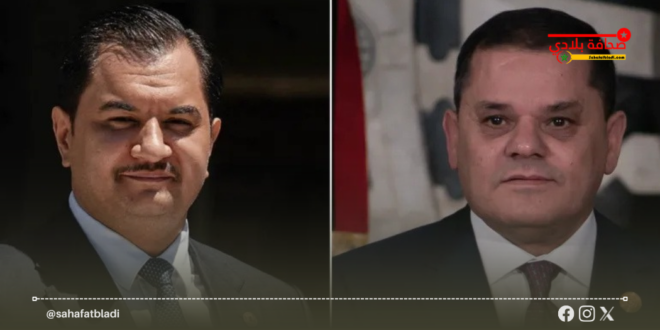
Data reported by the newspaper indicate that the initiative includes complex political arrangements, including retaining Abdul Hamid Al-Dabaiba in his position as head of the National Unity Government in Tripoli, in exchange for assigning a presidential executive role to Saddam Haftar, the son of the commander of the “Libyan National Army” in the east, Khalifa Haftar, within the framework of an influence-sharing formula between the two parties.
According to the same sources, the American plan is presented as a complementary path to the United Nations efforts aimed at organizing parliamentary and presidential elections, and it may constitute a short transitional phase before the upcoming elections, if a consensus is reached between the Libyan parties.
The initiative also includes a push towards unifying economic and military institutions, in parallel with encouraging American oil companies to return to investing in Libya, amid estimates of the possibility of raising oil production to about 3 million barrels per day in the coming years if the situation stabilizes.
Despite this proposal, the Financial Times quoted diplomats and analysts questioning the possibility of implementing the plan, in light of the continuing political division between East and West and the absence of indications of an actual rapprochement between the parties, in addition to complications related to power-sharing and the restructuring of sovereign institutions.
Libya has been living in a state of political and security division since 2011, with power divided between a government in Tripoli in the west and a parallel authority in Benghazi in the east, amid repeated international attempts to reunite institutions and end the political stalemate.
Source: “My press”