 صحافة بلادي صحيفة إلكترونية مغاربية متجددة على مدار الساعة تعنى بشؤون المغرب الجزائر ليبيا موريتانيا تونس

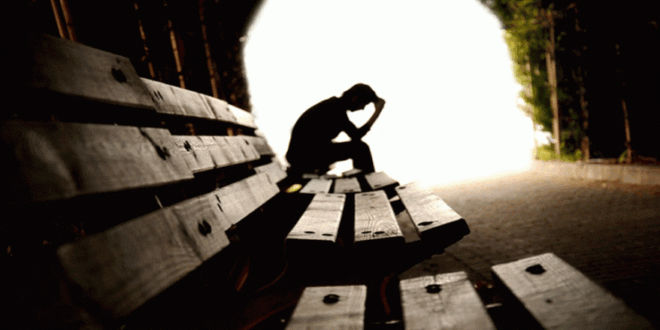
Many people choose to isolate and be alone during times of grief, especially when losing a loved one. While some find comfort in staying away from others during moments of pain, others believe that socializing and strengthening connections with friends and family is the way to relieve pain and injury.
The “B Psychology Today” website published a report that attempts to answer many questions, most notably: Why do many people tend to isolate themselves when sad? Does loneliness help relieve pain or may it have negative effects? The report also raises another question: “Why do some people prefer to sit alone in times of grief rather than seek social support?”
American writer George Michelson Foy points out that isolation may exacerbate feelings of sadness, and push the sad person into a spiral of isolation and depression. In some cases, this isolation may turn into “chronic grief,” a type of grief that is classified in medical studies as delayed and atypical grief.
Foy also points out that isolation can also have serious physical effects, one of the most horrific of which is what is known as “broken heart syndrome.” This syndrome leads to severe health problems, including difficulty breathing, chest pain, and sometimes heart failure, as a result of profound emotional loss.
For her part, Hope Iglehart, a psychotherapist in New York City, says, “The emotional loss is so profound that the person experiencing grief experiences an emotional state that is difficult to describe.” She adds, “A person in mourning feels as if he is living in another world. He loses his sense of time and place, and may even avoid food and drink.”
Psychologists agree that feeling sad is often accompanied by a feeling of loneliness, as the person feels that no one understands what he is going through. For example, a husband who has lost his wife or a wife who has lost her husband often feels that no one knows the deceased or feels the grief as deeply as they do, which makes talking to others difficult and painful.
At the conclusion of the report, B Psychology Today concludes that there is a necessary balance between isolation and a gradual return to social life. While a person experiencing grief needs their own space to hold the memory of the loss, they also need social support from friends and family to move forward in the healing process.