 صحافة بلادي صحيفة إلكترونية مغاربية متجددة على مدار الساعة تعنى بشؤون المغرب الجزائر ليبيا موريتانيا تونس

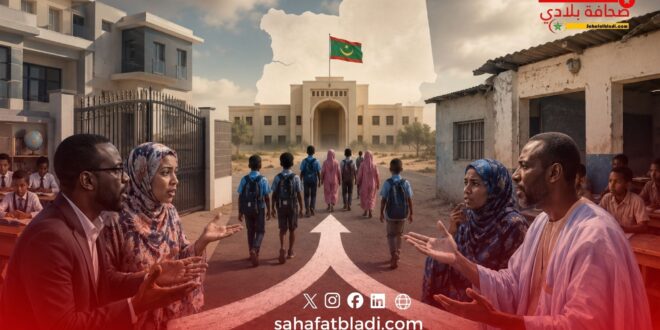
Nouakchott –The new government trend in Mauritania towards the gradual abolition of private education has sparked widespread controversy within educational and social circles, amid a division between supporters who see it as a step to achieve equality and unify the quality of education, and opponents who warn of its repercussions on jobs and the educational structure in the country.
This discussion comes within the framework of educational reforms launched by the Mauritanian authorities since 2022, aiming to strengthen public education and unify the school system by 2030, by making basic and preparatory education free and compulsory for all children.
Under these reforms, private schools will gradually stop receiving new students after the year 2027, while maintaining only private secondary education in its final stage, which has raised widespread concerns among school owners, teachers, and families associated with this sector.
The Mauritanian government believes that the new project aims to reduce social disparities and ensure equal opportunities between different groups of society, especially in light of the continuing disparity in access to education between regions and social groups.
In this context, Mohamed Salek Ould Taleb stressed that the reforms seek to build “a unified school for all,” adding that “all students will wear the same uniform and receive the same education from south to north.”
On the other hand, a number of workers in the private education sector expressed their concern about the impact of these decisions on the future of private educational institutions and the job opportunities associated with them.
Mayah Ould Abdel-Wadoud said that the changes are “accelerated and sudden,” noting that some schools have already begun closing primary sections, causing monthly financial losses and fears of a wider wave of closures in the coming years.
UNESCO data indicate that about 30% of school-age children in Mauritania do not enroll in education, while a large number of students face difficulties in reading and basic understanding of texts at the age of ten.
World Bank data also indicate that about 58% of Mauritania’s population suffers from poverty, which limits their ability to access quality education and other basic services.
This file brings back to the forefront the debate related to social and ethnic disparities within Mauritania, as the authorities consider that strengthening public schools may contribute to reducing disparities and achieving greater integration between the various components of society.
On the other hand, critics of the reform believe that private schools already included students from diverse social and ethnic backgrounds, considering that the real crisis lies in the weakness of the educational infrastructure and human resources, and not in the nature of the educational system itself.
This project is expected to continue to raise controversy in the coming months, as the practical stages of implementing the education restructuring plan in Mauritania approach.
Source:“My press”