 صحافة بلادي صحيفة إلكترونية مغاربية متجددة على مدار الساعة تعنى بشؤون المغرب الجزائر ليبيا موريتانيا تونس

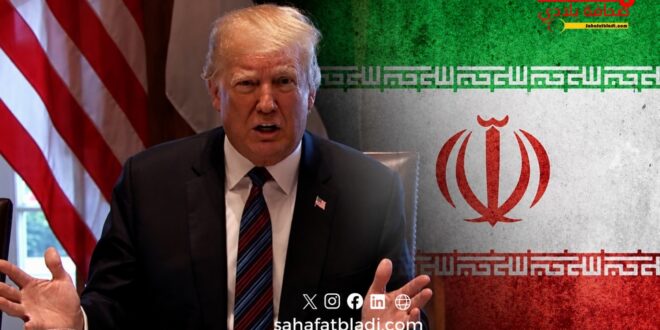
United States– Military tension between the United States and Iran returned to the forefront, after the US Central Command (CENTCOM) announced the implementation of a new round of strikes targeting dozens of Iranian military sites, while the Iranian Revolutionary Guard announced the targeting of American bases in the Gulf, in an escalation that raises questions about the future of the confrontation between the two parties.
The US Central Command reported that its forces carried out strikes targeting90 military targetsInside Iran, it included air defense systems, coastal surveillance sites, and facilities for storing missiles and drones, in addition to military infrastructure along the Iranian coast.
She added, in a statement, that these strikes came in response to what she described as “Iran’s violation of the ceasefire,” following the targeting of three commercial ships in the Strait of Hormuz.
On the other hand, the Iranian Revolutionary Guard announced that it targeted what it described as facilities and infrastructure linked to American bases inArifjan and Ali Al-Salem in Kuwait, andJuffair and Sheikh Issa in BahrainWarning that any new American attack will be met with a broader response that may include other bases in the region.
This escalation comes at a time when the two sides are exchanging accusations of violating the memorandum of understanding that was regulating the calm between them, while US President Donald Trump had previously announced the end of its implementation in light of recent developments.
In a reading of the military scene, the military and strategic expert, ColonelNidal Abu ZeidThe recent American strikes reflect a gradual escalation, explaining that the new round targeted a larger number of targets and took a longer time compared to the previous strikes, which he considered an indication of an upward trend in operations.
Abu Zeid explained that the United States is currently adopting what he described as “comfort hunting,” a tactic based on precisely targeting high-value sites, with the aim of reducing Iranian military capabilities, especially the naval ones, while avoiding engaging in large-scale military operations with high political and military costs.
He added that Washington’s use of the term “attacks” instead of “military operation” reflects, in his estimation, the US administration’s desire to avoid constitutional procedures that might require obtaining congressional approval in the event of expanding the scope of operations.
On the other hand, the same expert believes that Iran does not seem interested in entering into a comprehensive war, but rather seeks to maintain the principle of deterrence and demonstrate its ability to respond, while being careful to avoid direct targeting of American naval vessels, as this may have broad military repercussions.
Observers believe that the developments of the coming days will be decisive in determining whether the confrontation will remain within the scope of limited strikes and mutual responses, or whether it will move towards a broader escalation that may reflect on the security of the region and international shipping traffic, especially in the Strait of Hormuz.
Source:“My press”