 صحافة بلادي صحيفة إلكترونية مغاربية متجددة على مدار الساعة تعنى بشؤون المغرب الجزائر ليبيا موريتانيا تونس

Rabat:
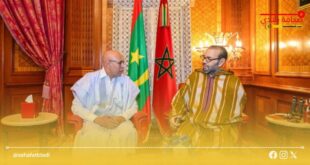
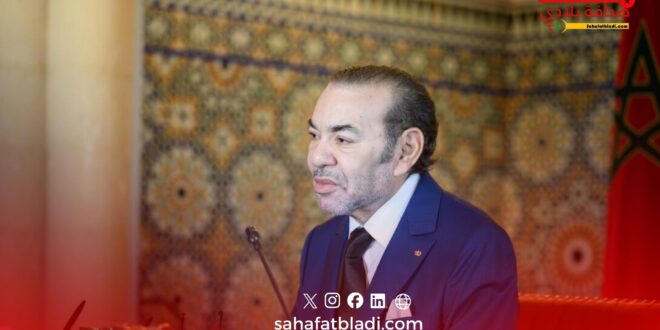
His Majesty presidedKing Mohammed VIYesterday, Thursday, April 9, 2026, at the Royal Palace in Rabat, a ministerial council was designated to deliberate on a broad program for territorial development, in addition to presenting the outcome of the agricultural season, approving legal texts and appointments to senior positions, as well as international agreements.
During this council, the Minister of the Interior gave a presentation on the new generation of integrated territorial development programs, with a total financial envelope of approximately 210 billion dirhams distributed over eight years, with the aim of improving citizens’ living conditions and responding to local needs, especially in the areas of employment, health, education, and water provision.
To implement this program, a new governance structure was adopted, based on a national committee headed by the Prime Minister to ensure coordination and financing, in addition to transforming project implementation agencies at the regional level into joint-stock companies headed by heads of regions, allowing for reconciliation between public oversight and flexibility of management, in addition to the creation of regional committees headed by governors and workers to track field implementation.
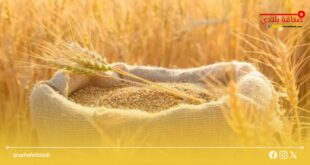
Regarding the agricultural sector, the Minister presentedAgricultureA presentation on the positive outcome of the agricultural season, where rainfall recorded an increase of 54 percent compared to the general average for thirty years, reaching 520 mm, while the dams’ reserves amounted to about 12.8 billion cubic meters with a filling rate of up to 75 percent.
These climatic conditions were reflected in agricultural production, as olive crops reached about two million tons, an increase of 111 percent, while citrus production reached 1.9 million tons, an increase of 25 percent, while date production recorded about 160 thousand tons, an increase of 55 percent.
At the legislative level, the Ministerial Council approved two draft regulatory laws. The first is concerned with amending the legal framework of the regions to keep pace with the reform of territorial governance and enhance financial transfers for their benefit. The second concerns the inclusion of the National Agency for Child Protection in the list of strategic institutions.
In the health sector, His Majesty the King kindly appointed five general directors of territorial health groups: Hicham Afif (Casablanca-Settat region), Ibrahim Lakhal (Rabat-Salé-Kenitra region), Abdelkarim Daoudi (Fez-Meknes region), Ibrahim Al-Ahmadi (Laayoune-Sakia El Hamra region), and Tariq Al-Harti (Souss-Massa region).
His Majesty the King, in his capacity as Supreme Commander and Chief of General Staff of the Royal Armed Forces, also approved a decree to complete the list of military attaches abroad.
At the international level, 15 international agreements were ratified in the areas of military, customs and judicial cooperation, in addition to the establishment of a national office for the African Union Development Agency (NEPAD) in Morocco.
This Ministerial Council reflects an integrated approach that combines promoting territorial development, supporting the agricultural sector, modernizing the legal framework, in addition to strengthening the Kingdom’s international presence.
Source:“My press”