 صحافة بلادي صحيفة إلكترونية مغاربية متجددة على مدار الساعة تعنى بشؤون المغرب الجزائر ليبيا موريتانيا تونس

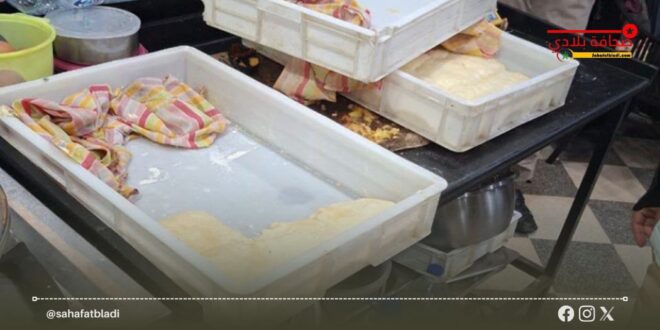
Setif –The recent inspections of restaurants and meat and fish stores in the state of Setif have reopened the debate on the extent to which hygiene and food safety conditions are respected within catering establishments, in light of the rising temperatures and the increased risk of spoilage of highly perishable foodstuffs.
Concerns increased after stories were circulated on social media about finding insects inside ready-made meals, coinciding with field interventions by oversight services that resulted in the confiscation and destruction of significant quantities of food items unfit for consumption, which raises questions about the extent to which some stores adhere to storage and hygiene standards.
During recent days, operations carried out by the fraud suppression teams of the Setif Directorate of Commerce revealed the seizure of 120 kilograms of grated cheese unfit for consumption in a restaurant, in addition to200 kilograms of fish, 3 kilograms of minced meat, and a kilogram of cream cheeseIn another regulatory process, before it reaches the consumer.
The violations were not limited to restaurants, as a committee affiliated with the Directorate of Health and Public Hygiene in the municipality of Setif, in coordination with the security services, seized322 kilograms of unfit for consumption red meat and 180 eggs preserved in unsanitary conditions inside a butcher shop.
The Commerce Department confirmed that inspection campaigns continue periodically, with a focus on monitoring preservation, storage and display conditions, especially during the summer, when the risk of bacteria multiplying in meat, fish, dairy products and eggs increases when the cold chain is disturbed.
In this context, nutrition specialists have explained that high temperatures make quickly perishable foods more vulnerable to microbial contamination, warning against practices such as leaving food items out of refrigeration, re-freezing them after thawing, or using products of questionable validity, as this may result in cases of food poisoning.
Observers believe that consumer protection is not limited to oversight campaigns only, but rather requires a permanent commitment from food store owners to health standards, in addition to enhancing consumer awareness of the necessity of choosing stores that respect hygiene conditions and reporting any practices that may pose a threat to public health.
Source:“My press”