 صحافة بلادي صحيفة إلكترونية مغاربية متجددة على مدار الساعة تعنى بشؤون المغرب الجزائر ليبيا موريتانيا تونس
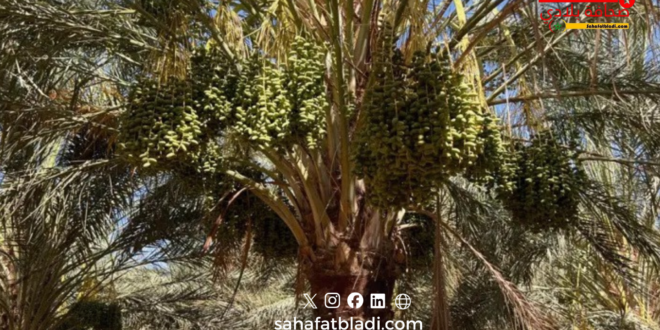
- LibyaFears are mounting in Libya that the date sector is entering a new crisis, with the harvest season approaching and the date export ban imposed by the Minis...
- On April 21, the Ministry of Economy issued a decision banning the export and re-export of a number of agricultural and marine products, as part of measures aim...
صحافة بلادي — LibyaFears are mounting in Libya that the date sector is entering a new crisis, with the harvest season approaching and the date export ban imposed by the Ministry of Economy and Trade continuing, amid warnings from farmers and exporters of the repercussions of the decision on one of the most important non-oil agricultural sectors in the country.
On April 21, the Ministry of Economy issued a decision banning the export and re-export of a number of agricultural and marine products, as part of measures aimed at ensuring the abundance of goods within the local market and reducing rising prices.
Date producers believe that generalizing the ban on this sector threatens an activity that relies heavily on foreign markets, especially since local production clearly exceeds the needs of the Libyan market.
According to data from the Food and Agriculture Organization of the United Nations (FAO), Libya’s production of dates reached about188 thousand tonsIn 2023, it ranks eleventh in the world, ninth in the Arab world, and fifth in Africa, while the number of palm trees is estimated at about8 million palm treesDistributed in the oasis regions and southern Libya.
Ibrahim Nasr, a member of the Board of Directors of the General Union of Date Exporters, confirmed that more than4 thousand tonsOf dates are still stuck between containers, port docks and warehouses, in addition to about3 thousand tonsOthers are with farmers or in various marketing stages, warning that storage facilities will be full as the new season approaches in a few weeks.
He explained that the continued suspension of exports may lead to a decline in importers’ confidence in the traditional markets for Libyan dates, led by Morocco, Turkey, India, and Indonesia, which may push them to turn to other suppliers.
He pointed out that surplus production, in the absence of export outlets, may cause prices to collapse to levels below the cost of production, which threatens huge losses for farmers and affects their future investments in palm cultivation.
The repercussions of the crisis are not limited to producers only, as its impact extends to the sectors of transportation, storage, packaging and logistics services, in addition to its economic and social repercussions on the regions of the south and the oases, whose residents depend heavily on palm cultivation.
On the other hand, the Ministry of Economy and Trade confirmed that the decision to ban exports is a temporary measure aimed at protecting the local market, ensuring price stability, and providing basic goods to citizens, noting that the priority at the current stage is to meet internal demand before expanding exports.
The Ministry added that export remains an important economic option, but the current circumstances require achieving a balance between the needs of the local market and maintaining food security, while working in the future to raise production and develop supply chains to allow export to resume without affecting the availability of goods.
For his part, economic analyst Abdel Karim Al-Jadeedi considered that the solution does not lie in a comprehensive ban or opening exports completely, but rather in managing the production surplus according to accurate data, in addition to developing storage facilities and manufacturing and packaging industries, in a way that raises the added value of Libyan dates and enhances their competitiveness in international markets.
Source:“My press”




























 ليبيا وموريتانيا