 صحافة بلادي صحيفة إلكترونية مغاربية متجددة على مدار الساعة تعنى بشؤون المغرب الجزائر ليبيا موريتانيا تونس

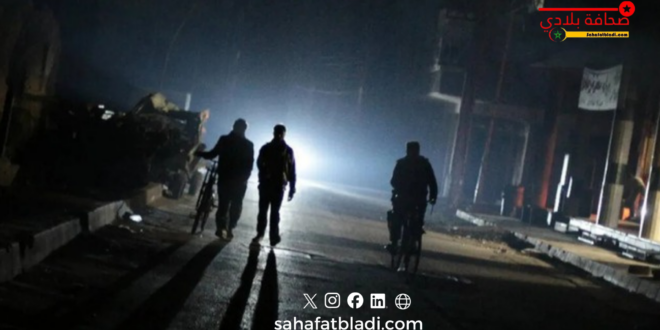
Algeria –A widespread power outage that included 16 Algerian states revived the debate about the readiness of the country’s energy infrastructure, after the outage continued for hours in a number of regions, despite the authorities announcing during the past months that they have a large surplus in electricity production and plans to export it to Europe.
The Algerian Ministry of Energy explained that the fault started from a strategic electrical facility in the Sidi Okba region in the state of Biskra, affected by high temperatures and humidity, before extending through the national grid to affect several states in the east of the country, with varying disturbances recorded in other regions, including the capital, Algiers, Ghardaia, and Bouira.
The Ministry confirmed that the technical teams were able to gradually restore power supply after the intervention of a crisis cell and direct follow-up from senior officials, and described the incident as “exceptional.”
The outage sparked a wide debate about the ability of the electricity transmission and distribution network to cope with disruptions and increasing demand, especially since Algeria is one of the largest producers of natural gas in Africa, and its electricity production stations depend almost entirely on this resource.
Observers believe that the crisis has highlighted the difference between the production capacity of electricity and the efficiency of transmission and distribution networks, as the availability of surplus production does not necessarily guarantee continuity of service in the event of weak infrastructure or limited protection and control systems.
This comes at a time when Algerian President Abdelmadjid Tebboune had previously announced that the country had a surplus of approximately 12,000 megawatts, with talk of projects to export electricity to Europe, especially through interconnection with Italy, in addition to continuing to supply Tunisia with energy during peak periods.
Sonelgaz had previously announced the enhancement of its production capabilities by adding 1,850 megawatts, but the recent incident refocused on the challenges of modernizing the national grid, after the authorities approved the launch of a five-year program to develop monitoring and control systems and improve the flexibility of the electricity network.
In the same context, an electrical station project completed by Algeria in Niger with a production capacity of 40 megawatts has returned to the forefront, as part of cooperation projects with the Sahel countries, which has prompted some observers to raise questions about investment priorities between supporting external projects and enhancing internal infrastructure.
Specialists confirm that the increase in heat waves and the high demand for electricity require accelerating the modernization of transmission and distribution networks, ensuring the stability of supplies and reducing the risks of recurring widespread outages in the future.
Source: “My press”