 صحافة بلادي صحيفة إلكترونية مغاربية متجددة على مدار الساعة تعنى بشؤون المغرب الجزائر ليبيا موريتانيا تونس

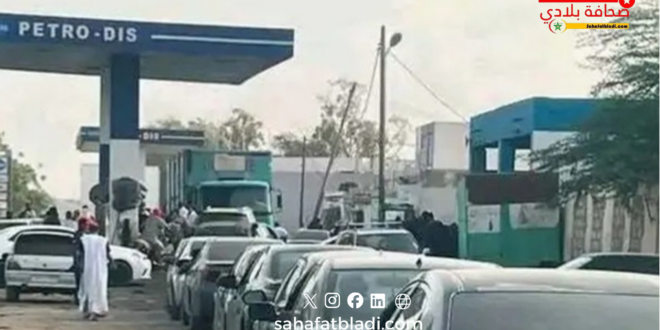
NouakchottIn recent days, the Mauritanian capital, Nouakchott, and a number of cities have witnessed disruptions in fuel supply that led to long queues in front of distribution stations, despite the government’s confirmation of the availability of a sufficient national stock of petroleum derivatives and the continuation of supply operations normally.
The disturbance caused major congestion at gas stations, as drivers were forced to wait for hours to get gasoline and diesel, which affected transportation movement and sparked widespread dissatisfaction among citizens.
In an attempt to contain the controversy, the Mauritanian Minister of Energy and Oil, Mohamed Ould Khaled, confirmed that the queues were “unjustified,” noting that fuel was available and that the government had taken measures to ensure the smooth distribution, including settling distributors’ dues and facilitating their access to financing.
During a meeting with fuel distributors, the minister accused some gas station managers of refraining from supplying gasoline and diesel despite the availability of stock, considering that this behavior violates the legal obligations regulating the fuel distribution sector.
On the other hand, interpretations of the causes of the crisis varied between activists and observers, as some of them considered that what was happening reflects imbalances in the distribution system, while others suggested that some distribution companies and station owners postponed purchasing fuel in anticipation of an upcoming government decision regarding fuel prices, in order to avoid the possibility of incurring losses in the event of price adjustments.
In this context, Mauritanian activist Yacoub Maham believed that the continuation of queues despite the availability of fuel in stores highlights a defect in the management of distribution operations, calling for addressing any practices that may affect the regularity of supply.
For his part, Mauritanian activist Abay Ould Adaa considered the crisis to be “artificial,” attributing this to the reluctance of some distribution companies and gas stations to purchase the available quantities pending the government’s decision to review fuel prices.
These developments come after months of increases in fuel prices in Mauritania, which made any disruption in supply operations raise citizens’ fears of additional economic and livelihood repercussions.
Source:“My press”