 صحافة بلادي صحيفة إلكترونية مغاربية متجددة على مدار الساعة تعنى بشؤون المغرب الجزائر ليبيا موريتانيا تونس

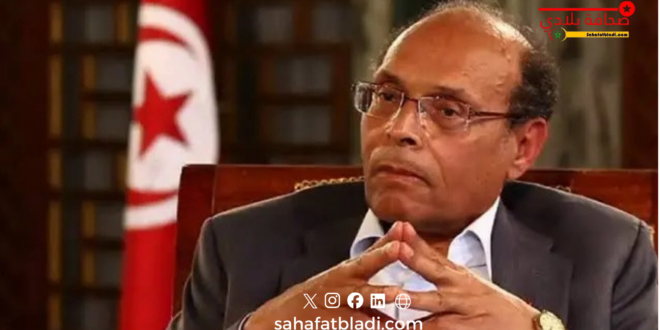
Tunisia –The Ministry of Foreign Affairs, Immigration and Tunisians Abroad, commissioned by President Kais Saied, summoned the French Ambassador to Tunisia to inform her of a strongly worded official protest against the broadcast of the channel“France 24”An interview with former Tunisian President Moncef Marzouki, whose content was considered by the Tunisian authorities to harm the state’s sovereignty and national security.
The Tunisian Foreign Ministry said, in an official statement, that the interview included statements that it described as targeting state institutions and calling for strife and internal fighting, considering that what happened exceeds the limits of freedom of expression and media professional ethics, and represents unacceptable interference in the country’s internal affairs.
The Secretary of State to the Minister of Foreign Affairs, Mohamed Ben Ayyad, confirmed during his meeting with the French Ambassador that the repeated hosting of figures wanted by Tunisian justice through French public media to promote what he described as inflammatory content and slander against the state, arouses Tunisia’s dissatisfaction, stressing that the official nature of the “France 24” channel places a moral responsibility on the French state, and cannot be justified by the independence of the editorial line or freedom of the media.
At the request of the President of the Republic, the Foreign Ministry informs the French Ambassador in Tunisia of a “strong protest” following a television interview on a French channel with “one of those wanted by Tunisian justice, and the violation of the sovereignty of the Tunisian state and the targeting of its national security.”#watt_agency
— Agence Tunis-Afrique-Presse (@AgenceTAP)July 24, 2026
Tunisia called on the French authorities to take the necessary measures to prevent the recurrence of such practices, stressing that such actions violate Tunisian legislation, in addition to the principles of international law and diplomatic norms.
According to what was reported in the television interview, former Tunisian President Moncef Marzouki considered that the political scene in Tunisia is witnessing a shift in the nature of the debate, explaining that attention is no longer focused on the issue of President Kais Saied’s departure, but rather is focused on searching for possible alternatives to lead the country in the next stage.
Al-Marzouqi pointed out that the internal protests were no longer achieving the momentum they had previously, considering that the weak participation in some opposition movements raises questions about the political forces capable of imposing themselves as an alternative in the future.
He added that preparations for the period after the current president, in his estimation, are taking place away from the limelight and in what he described as “closed rooms,” whether inside or outside Tunisia, hinting at the presence of external parties seeking to influence the course of political events in the country.
Despite his talk about the existence of arrangements to prepare political alternatives, Al-Marzouqi refused to reveal any names, considering that these files are “extremely sensitive” in the current circumstance, and that talking about them publicly may not be appropriate.
This development comes in light of the continuing tension between President Kais Saied and former President Moncef Marzouki, who resides in France and is considered one of his most prominent critics, after sentences were issued against him in absentia, including a 22-year prison sentence in June 2025 in a case heard by the criminal department specializing in terrorism cases, while Marzouki and his supporters consider these prosecutions to be politically motivated.
Since July 25, 2021, Tunisia has been experiencing a political crisis following the exceptional measures announced by President Kais Saied, which included dissolving Parliament and approving a new constitution. While the authorities confirm that these measures came to protect the state and preserve its institutions, while opposition parties describe them as representing a departure from the constitutional path.
Source: “My press”